ServicesFleet Truck Insurance
Fleet Truck Insurance in Alpharetta
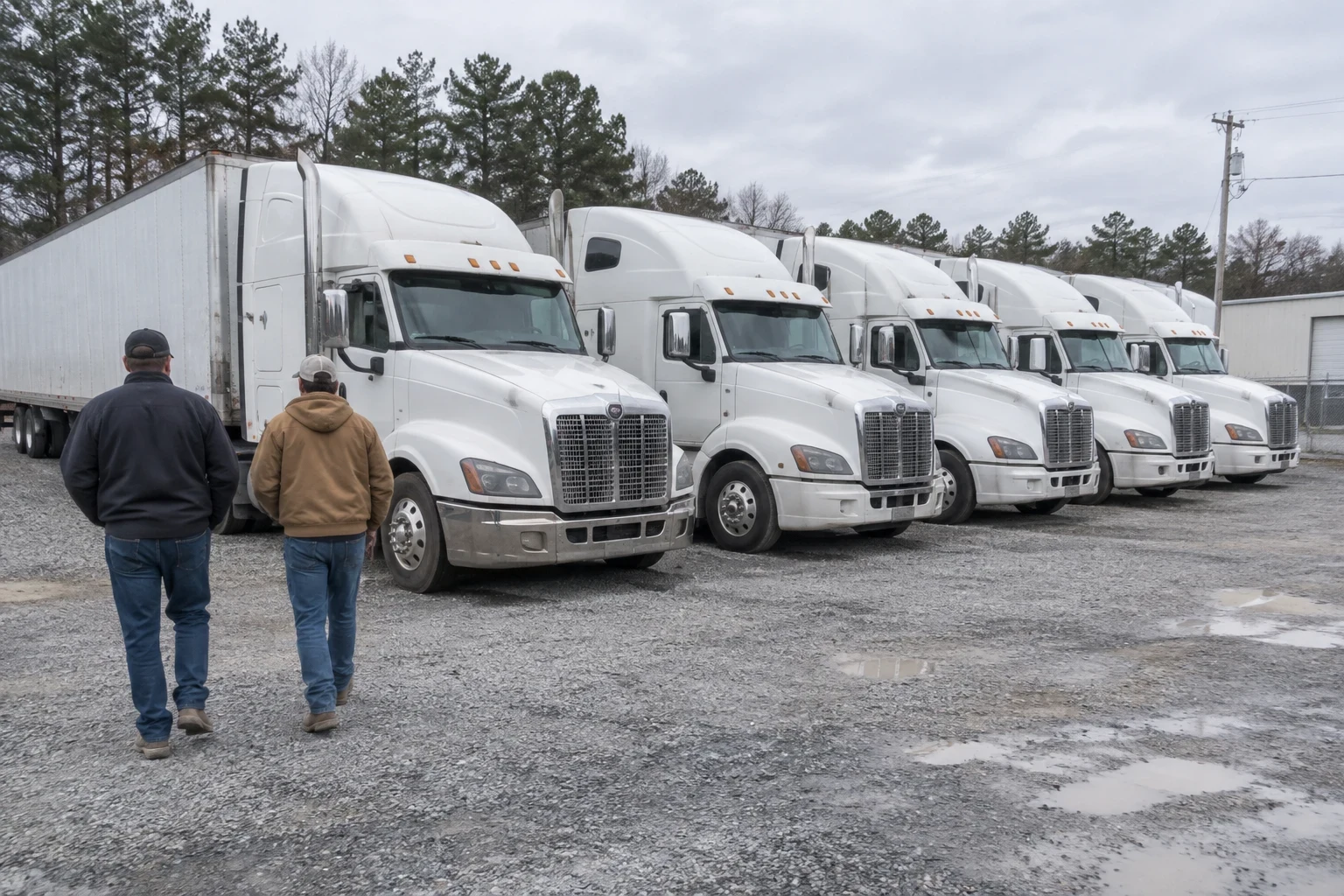
We write fleet truck insurance for motor carriers running several power units. You get one policy built around your vehicle schedule and driver list, and one agent who handles the quote, the filings, mid-term changes and every certificate of insurance your shippers ask for.
What a fleet policy does that single-truck policies don't
Once a motor carrier runs more than a few trucks, insuring each unit separately starts to cost money and time. Renewal dates drift apart, limits don't match, and a shipper asking for a certificate of insurance can get three documents with three different expiration dates. A fleet policy puts your trucks, trailers and drivers on one schedule with one effective date, so auto liability, physical damage and cargo coverage line up across the whole operation.
The underwriter prices a fleet differently, too. Instead of rating each truck on its own, carriers look at the operation as a unit: loss history across all vehicles, the driver roster as a group, your radius and commodities, and how you manage safety. A well-run fleet with clean loss runs can show that record to the market in a way a single truck cannot.
We work with fleets based in Alpharetta, Roswell, Johns Creek and the surrounding area. One person on our side keeps the file, so when you add a tractor on a Tuesday or a driver leaves on a Friday, you call the same agent who built the policy.
What we set up on a fleet policy
- Primary auto liability with filings
- We place the liability limit your contracts and authority require and make sure the federal and state filings tied to your DOT number and MC authority reflect it. If your limits change, the filings need to change with them, and we track that.
- Physical damage by scheduled unit
- Each tractor, straight truck and trailer is listed with its VIN and stated value. We review those values with you so an older unit isn't overinsured and a new purchase isn't left at last year's number.
- Motor truck cargo coverage
- Cargo limits are matched to what you actually haul and the highest-value load you carry, not a round number. We read the exclusions with you, since reefer breakdown, unattended vehicle and theft terms vary a lot between carriers.
- Driver schedule management
- We list your drivers for the carrier with their license details and motor vehicle records, and flag anyone likely to be excluded or surcharged before the application goes out. Hiring decisions go better when you know how a driver will rate.
- Trailer interchange and related coverages
- If your fleet pulls trailers you don't own under an interchange agreement, we add trailer interchange coverage. Non-trucking liability or bobtail coverage can be arranged for leased-on owner-operators where it applies.
- Certificates and mid-term changes
- Certificate of insurance requests, additional insureds, unit adds and deletions all go through the same agent. You don't explain your operation again each time.
Signs your trucks need a fleet policy
Renewal dates are scattered
If your trucks renew in March, July and October, you're re-shopping coverage three times a year and paying for it in time and gaps. Consolidating to one effective date simplifies everything that follows.
Certificates don't match
Shippers and brokers reject certificates when limits or named insureds differ between units. That usually means the coverage underneath doesn't match either.
You're adding power units
Growing from two or three trucks to five or more often moves you into a different rating approach. It's worth reviewing structure before the next purchase, not after.
Driver turnover is rising
Frequent hiring means frequent driver additions, and each one changes your risk. A fleet file with a current driver schedule makes those changes faster and avoids running an unlisted driver.
Your loss runs have improved
Several clean years across your units is a record underwriters reward. If your premium hasn't reflected it, the policy may need to go back to market.
How we build your fleet quote
- 1
Gather the operation's details
On the phone or by video, we go over your DOT number, MC authority, commodities, operating radius, garaging location and current coverage. We ask for loss runs covering the past several years, because no fleet quote is accurate without them.
- 2
Build the vehicle and driver schedules
We list every unit with its year, make, VIN and value, and every driver with license and MVR information. Errors here are the most common reason a fleet policy gets re-rated after it's issued.
- 3
Go to market and compare
We take your file to carriers that write fleets of your size and class. When quotes come back, we lay them side by side by limit, deductible, exclusions and premium, and explain where the differences come from.
- 4
Bind, file and issue certificates
Once you choose, we bind coverage, handle the required filings and issue certificates to the shippers, brokers and lessors you name. After that, the same agent handles every change through renewal.

What moves a fleet premium
Fleet pricing comes from the operation as a whole, so a change in one area can shift the premium on every unit. We can't give you a number before the underwriting details are in, but we can show you which parts of your operation carry the most weight and what you can work on before renewal.
- Loss history
- Frequency of claims matters as much as size. Several small accidents often hurt a fleet's rating more than one large one, since they suggest a pattern.
- Driver quality
- Years of CDL experience, MVR violations and the age of each driver are rated individually and as a group. One high-risk driver can lift the cost for the whole schedule.
- Radius, routes and commodities
- Long-haul, interstate operations rate differently from local work, and higher-value or hazardous freight raises both liability and cargo pricing.
- Equipment values and deductibles
- Physical damage premium tracks the stated value of each unit. A higher deductible lowers premium, but only makes sense if the operation can absorb that amount on a bad week.
- Safety record and controls
- Your CSA scores, inspection results and practices like telematics or dash cameras show underwriters how the fleet is managed day to day.
Fleet truck insurance questions
Something not covered here? (770) 270-3686
How many trucks do I need to qualify for a fleet policy?
There is no single cutoff; each carrier sets its own minimum. Some treat a few power units as a fleet, others start higher. We know which markets write operations your size and take your file to those carriers.
Can I add or remove a truck mid-term?
Yes. Call us with the VIN, value and the date it goes into or out of service. We process the change with the carrier, adjust the premium for the remaining term, and update your certificates if needed.
What happens if a driver isn't on the schedule?
Depending on the policy, an unlisted driver may not be covered, or a claim could be disputed. Call us with new drivers before they get behind the wheel so we can confirm they are acceptable to the carrier.
Why do you need loss runs from my current insurer?
Loss runs are the carrier's official claim record for your operation, and underwriters won't give a firm quote without them. You request them from your current carrier, and we can tell you exactly which years and policies to ask for.
Will moving to a fleet policy lower my premium?
Sometimes, but not always. A fleet with clean loss runs and steady drivers often prices well, while a fleet with recent claims may see little change. We show you the comparison so the decision is based on actual quotes.
Put your trucks on one schedule
Have your DOT number, vehicle list and recent loss runs nearby, and we'll walk through what your operation needs. You'll deal with the same agent from the first quote through every change after it.